La Crosse, WI
Garage Door Roller Replacement, La Crosse WI
Worn rollers on La Crosse homes built 1967-1998 bind and jump track fast in cold-climate winters. See what causes it and what the repair involves.
The Complications
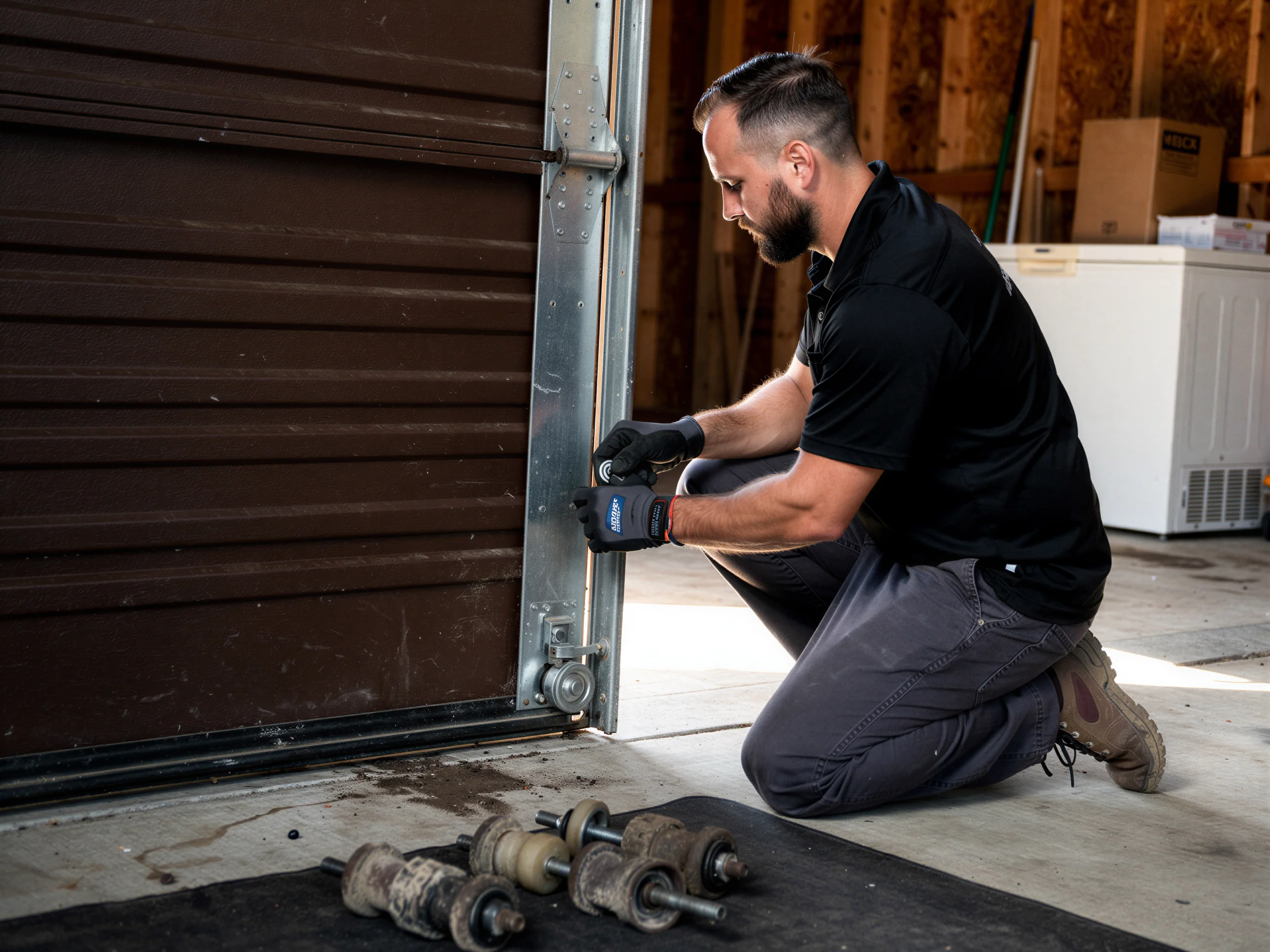
A roller job sounds simple until you're under the door with a flashlight. Most houses in this service area went up between 1967 and 1998, with the median landing around 1979 - which means a lot of original steel rollers still running in steel tracks with no nylon anywhere in the system.
Worn track and new rollers
Replacing rollers on that setup isn't a swap-and-go: the track is often bent or worn to match the old roller profile, so a new roller in a worn track can bind worse than the part it replaced.
Tension release before roller work
Spring tension has to come off the door before anyone touches the roller brackets, and on a door that's 20-40 years old, that tension is sometimes not what the original installer left it at.
Rusted stems and brackets
There's also the question of whether the stem and bracket are rusted into the track hardware from decades of condensation - which is common on doors of this era in a cold climate, and which turns a 20-minute job into something longer. We won't pretend every roller job is routine. Sometimes the track itself needs straightening or replacing first, and that changes the scope before we ever get to the new rollers.
The Symptom
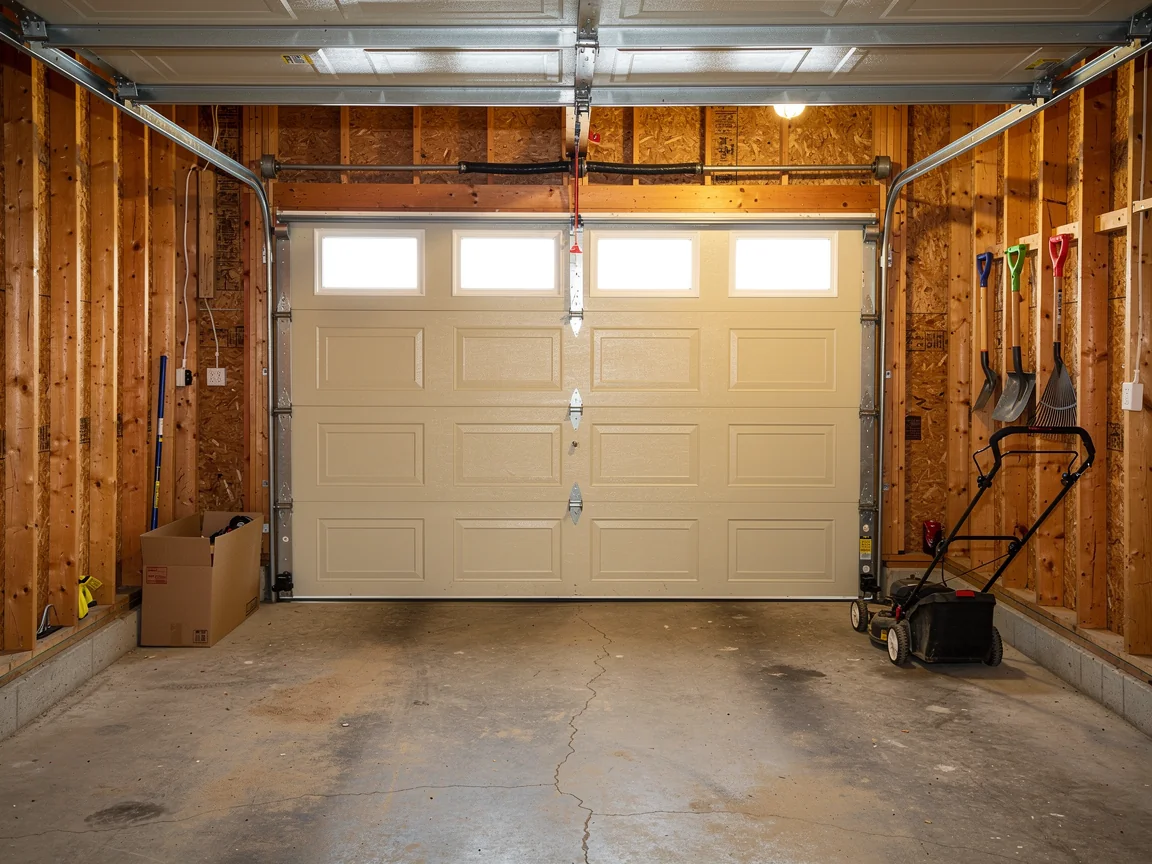
The giveaway is noise that wasn't there last winter - a grinding or popping sound as the door travels, worse at the top or bottom of the run where the curve in the track puts more side load on the roller.
Hesitation and uneven rise
You might also see the door hesitate or jump slightly in the track, or notice one side rising a beat behind the other. On older steel-roller doors common in this area's 1960s-70s housing stock, the rollers wear unevenly because the stems were never built to handle decades of freeze-thaw cycling.
Flat spots and wobbling wheels
If you can see flat spots worn into the roller wheel, or the roller wobbling loosely in its bracket instead of sitting square in the track, that's your roller, not your opener.
Early roller catch point
Catching it at this stage - before the roller actually leaves the track or seizes - is what keeps this a roller replacement instead of a track and roller replacement.
What Causes It Around Here
La Crosse sits in a severe cold climate band, and that's the real driver behind roller failure on houses from this era. Steel rollers and steel track both contract in deep cold, and the repeated expansion and contraction through a winter season works grease out of the stem and lets moisture in behind it - moisture that then freezes and thaws against the metal. On a house built in the 1960s-70s stretch that makes up most of the stock across our 19-town service area, that's forty-plus winters of cycling on hardware that was never upgraded to sealed nylon rollers. Add in de-icing salt tracked off cars onto a garage floor, and the lower rollers on the track take a corrosive hit that upper rollers mostly avoid. None of this is a defect in how the house was built - it's just what cold-climate steel-on-steel hardware does over four decades, and it's why roller wear shows up as a predictable pattern rather than a random failure.
The Cost of This Job
We don't have a flat number to quote you here, because the real driver of cost is what the rollers are riding in. Swapping steel rollers for sealed nylon ones on a track that's still straight and square is the cheap end of this job. Add a bent or rusted track section, a bracket that's seized, or a spring that needs re-tensioning once the door is unloaded, and the job grows. What we can tell you honestly: if your track shows pitting or visible bends at the curve, replacing rollers alone without addressing the track is a short-term fix - you'll be back under the door within a season or two. For households weighing repair against a bigger job, local income levels across the service area ($77,083 median) put most roller and track combination repairs well within a one-visit budget, but we'd rather look at the actual hardware before putting a figure on it.
Questions
Common questions
Can I just replace the rollers myself?
You can on some doors, but the spring has to be relieved of tension first, and on a door from the 1970s-era stock common here, that tension is sometimes different from what a newer door carries. If you're not comfortable locking out the torsion spring, it's not a part of this job to learn on.
Why do my rollers only grind in winter?
Cold contracts the steel in both the roller stem and the track, which squeezes out lubricant and tightens clearances that were fine in summer. It's the same hardware, just under more stress - common on steel-roller setups built before sealed nylon rollers were standard.
Do nylon rollers really last longer than steel ones here?
Yes, mainly because they don't corrode the way steel does against a salted, damp garage floor through a severe-cold winter. They also run quieter, which matters if the garage sits under a bedroom in a lot of the area's older single-story layouts.
Explore more
Explore More Services In La Crosse, WI
Garage Door Repair in La Crosse, Built Around What Actually Breaks Here
Spring, cable, and opener repair for La Crosse's 1970s-era housing stock. Learn more →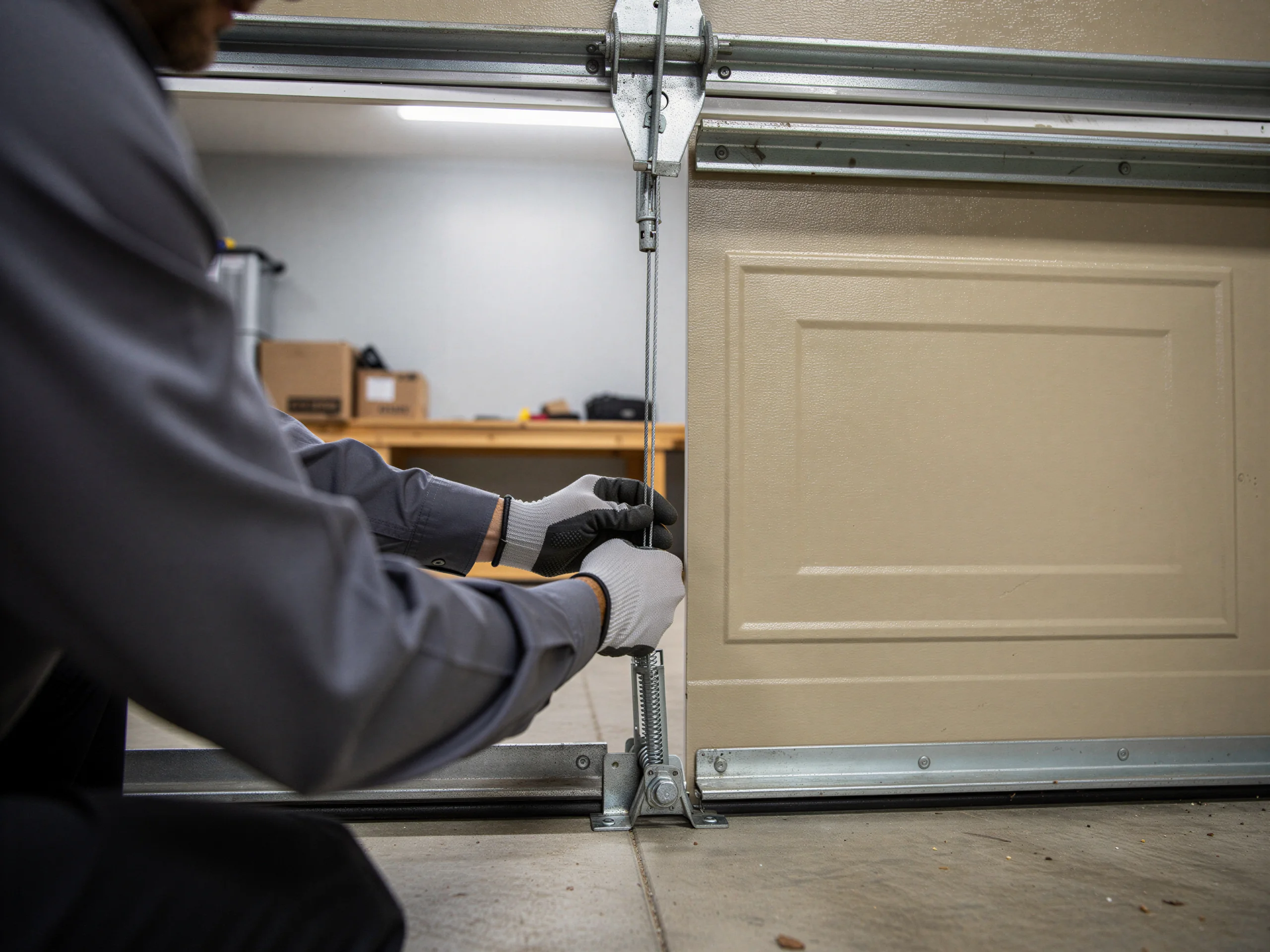
Garage Door Cable Repair for La Crosse Homes
Frayed or snapped garage door cables show up often in La Crosse homes built mostly 1967-1998, especially after severe cold. Learn more →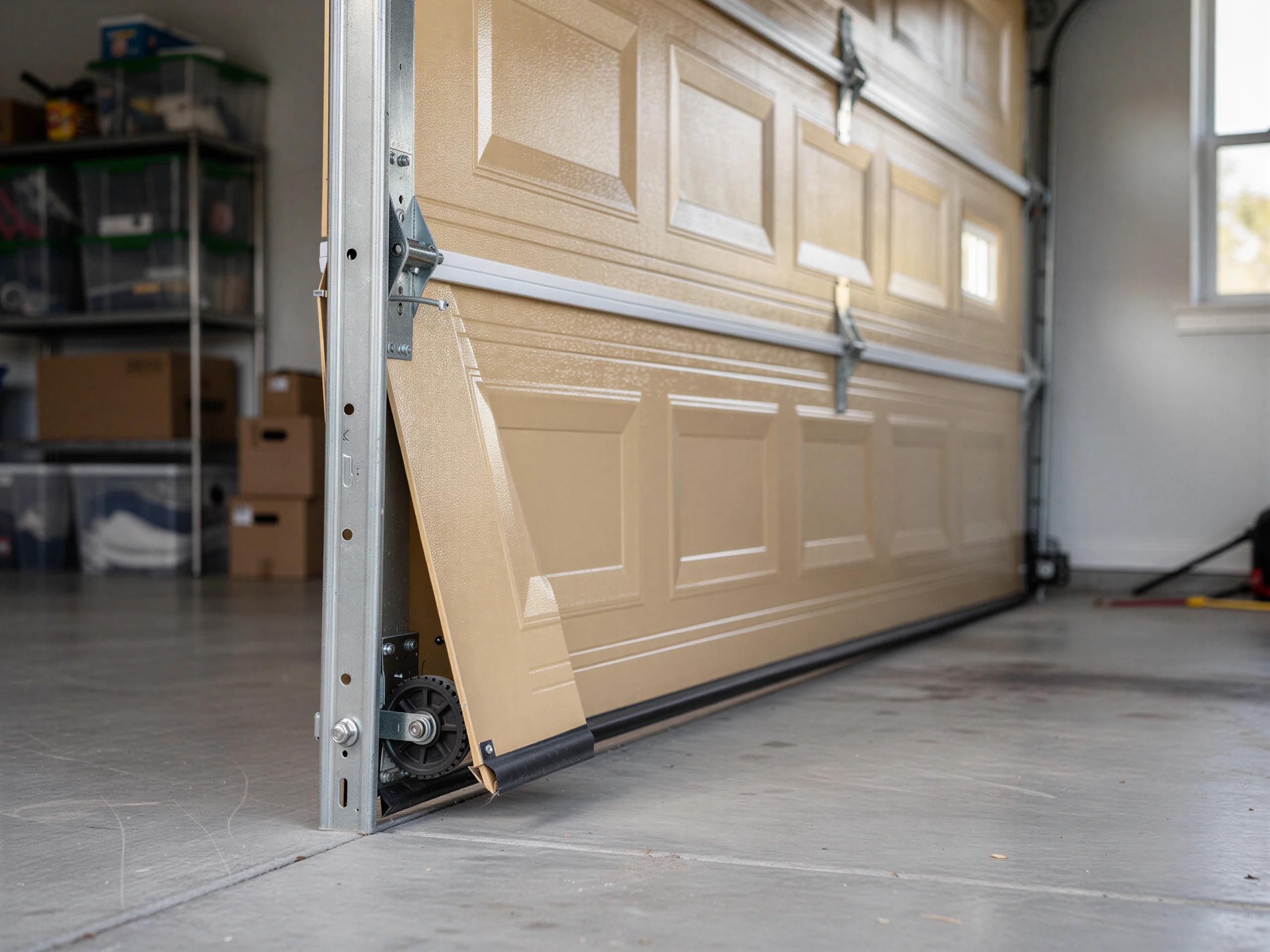
24/7 Emergency Garage Door Repair Across the La Crosse Area
A broken spring or stuck door doesn't wait for business hours. Learn more →
Garage Door Installation for La Crosse Homes
Planning a garage door install in La Crosse, WI? Learn more →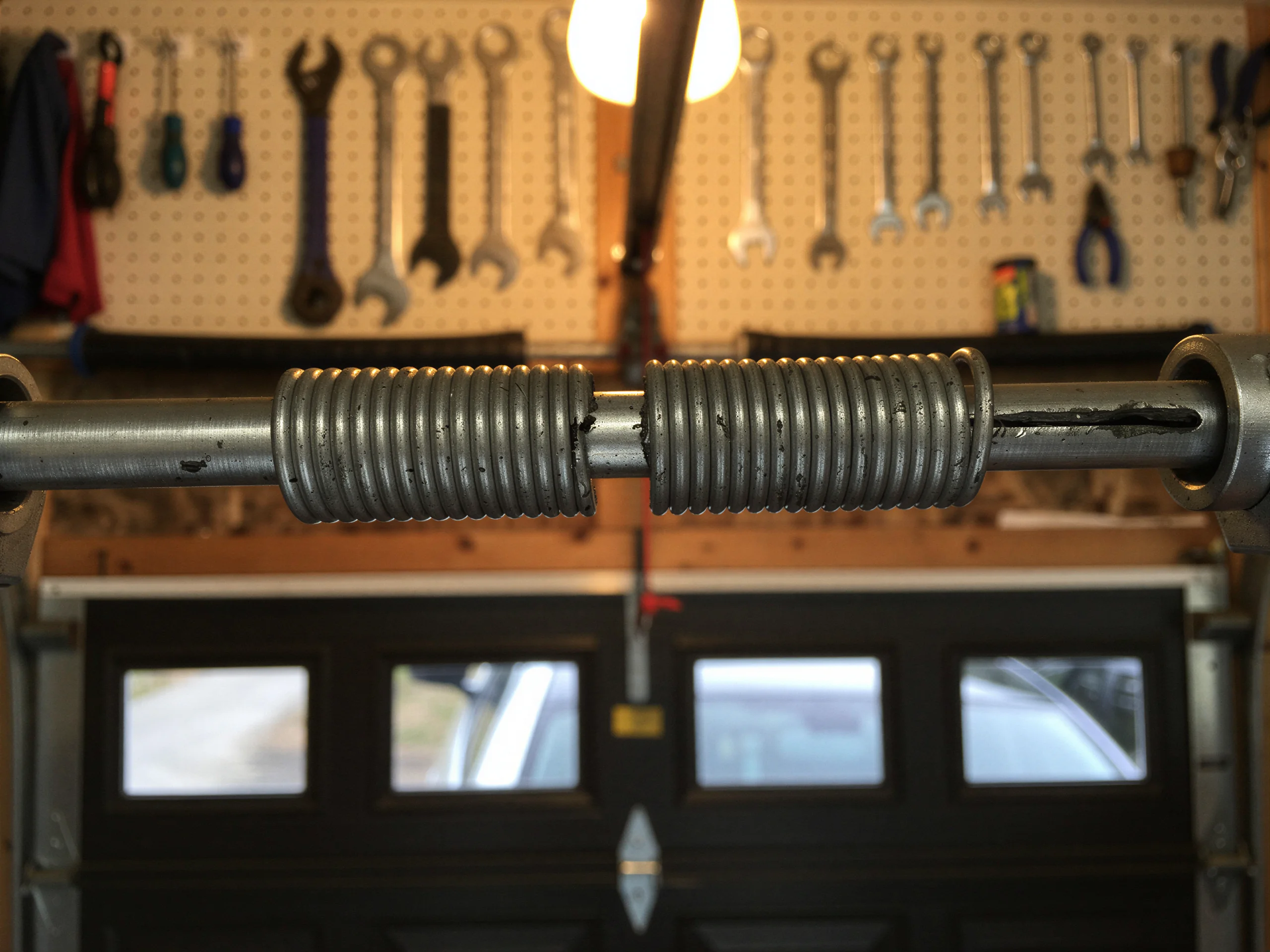
Garage Door Spring Repair for La Crosse Area Homes
Torsion springs fail early in La Crosse's cold winters and 1960s-90s housing stock. Learn more →Ready when you are
Need a garage door sorted in La Crosse?
La Crosse Garage Door Pros repairs and installs garage doors, springs and openers in La Crosse, WI and the surrounding area.