
Blog
Why La Crosse Garage Doors Jump Off Track
Homes in La Crosse built between 1967 and 1998 still run original track hardware that severe cold winters push out of alignment fast, so doors jump track.
What Local Conditions Do
Two things do most of the damage to a garage door track in this area: the age of the hardware and the winters. Housing in and around La Crosse mostly went up between 1967 and 1998, with a median build year of 1979, and that stretch covers the 1960s and 70s-era subdivisions found across the wider service area out toward Onalaska, Holmen, and West Salem. Garages from that period were framed and bracketed to the standards of their time, and a lot of that original steel track and lag-bolted bracket hardware is still hanging there, untouched.
Then there's the cold. This is a severe cold climate band, and that means real freeze-thaw cycles every winter, not just a few cold snaps. The slab under your track expands and contracts, the framing it's bolted to moves a little with the temperature swings, and steel track itself contracts in deep cold enough to pull bracket screws a fraction out of true. None of that is dramatic on its own. It's cumulative. A track that was dead straight in 1979 has had close to five decades of these small shifts working on it, and a lot of doors in this area are running on exactly that kind of track today.
The Situation
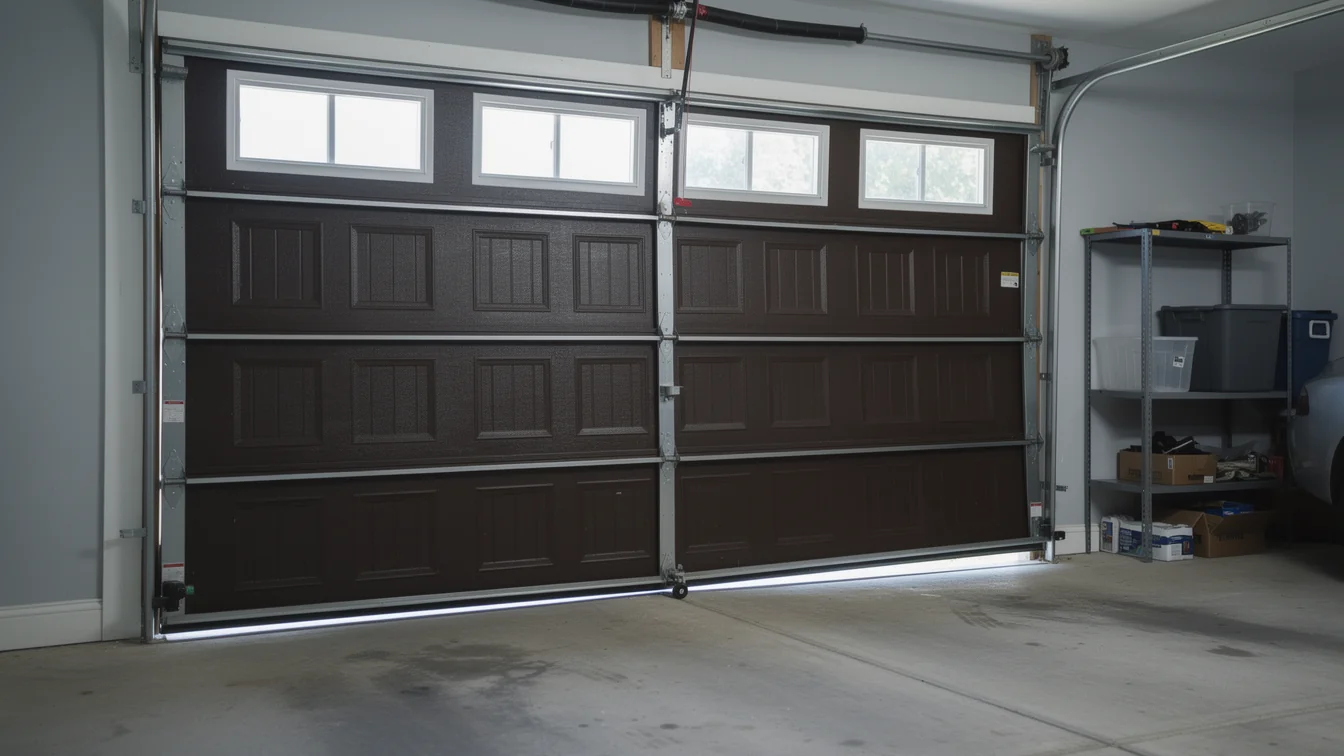
When a door goes off track here, it's rarely one dramatic event. It's usually a bracket that's worked loose from decades of seasonal movement, combined with a roller that's worn enough to ride up out of a track channel that's no longer perfectly parallel. You'll see it as the door binding on one side, a visible gap between roller and rail near the top, or the door catching and grinding partway through a cycle.
In houses built in that 1967-1998 window, the track brackets are often original, fastened into framing members that have shifted slightly with each hard freeze. The track itself may still be straight steel, but if the wall or header it's mounted to has moved even an eighth of an inch over the decades, that's enough to throw a roller off at the wrong moment. Garages on slab foundations are the ones we see this in most, since the slab itself heaves and settles with the frost line every winter, and the door track is bolted to framing that sits right on top of it. This is a mechanical, repeatable failure pattern tied directly to age and climate, not bad luck.
The Cost of This Job
We don't have a flat number to give you here, and we're not going to make one up. What a track job runs depends on whether it's a bent section that can be pulled and reset, a bracket that needs re-anchoring into solid framing, or a full track replacement because the rail itself is kinked. A door that's only off by a little, caught early, is a smaller job than one where a roller has already popped a cable or dented a panel on the way down.
The honest limitation is this: we can't quote accurately without seeing the track in person, because two doors that look the same from the driveway can have completely different damage once you get the panel open. What we can tell you is that in houses from the 1967-1998 era, once one bracket has worked loose, the others on the same track are usually close behind, since they've been through the same freeze-thaw cycles for the same number of years. It's worth having the whole track checked, not just the spot that's obviously bad.
Leaving It Alone
A door that's slightly off track doesn't fix itself, and in this climate it gets worse through the winter, not better. Every cold snap puts more strain on a bracket that's already loose, and every cycle of the door running on a roller that's climbing out of its channel wears that roller faster. Left long enough, the next failure point is usually a cable, since a door binding unevenly puts uneven load on both lift cables instead of splitting it evenly.
A cable that lets go on a door already off track is how you end up with a door that drops hard on one side, which can bend a panel or crack a stile. It's also harder on the opener, since the motor has to fight a door that isn't tracking straight, and that kind of strain burns out gears and drive components faster than normal use would. None of this happens overnight. It happens over another winter or two of the same freeze-thaw cycle that put the track out of alignment in the first place, which is exactly why it's worth dealing with before the season turns, not after.
Questions
Common questions
Why does my garage door only go off track in winter?
Steel track contracts in deep cold, and the slab and framing it's bolted to shift with every freeze-thaw cycle. In a severe cold climate like La Crosse's, that movement is seasonal and repeats every year, which is why a track that was fine in summer can start binding once temperatures drop hard.
My house was built in the 1970s. Is the track original?
It's common in this area. A lot of La Crosse housing dates to between 1967 and 1998, with a median build year of 1979, and plenty of garages from that window still have their original track and bracket hardware, which has had decades of freeze-thaw cycles to work loose.
Can I just push the door back onto the track myself?
You can sometimes reseat a roller that's barely off, but if a bracket is loose or the track is bent, forcing the door back on puts more strain on the cables and can make the next failure worse. If it's binding or grinding, it's worth having the track and brackets checked before running it again.
Recommendation
You Might Also Like
More garage door guides for La Crosse homeowners.
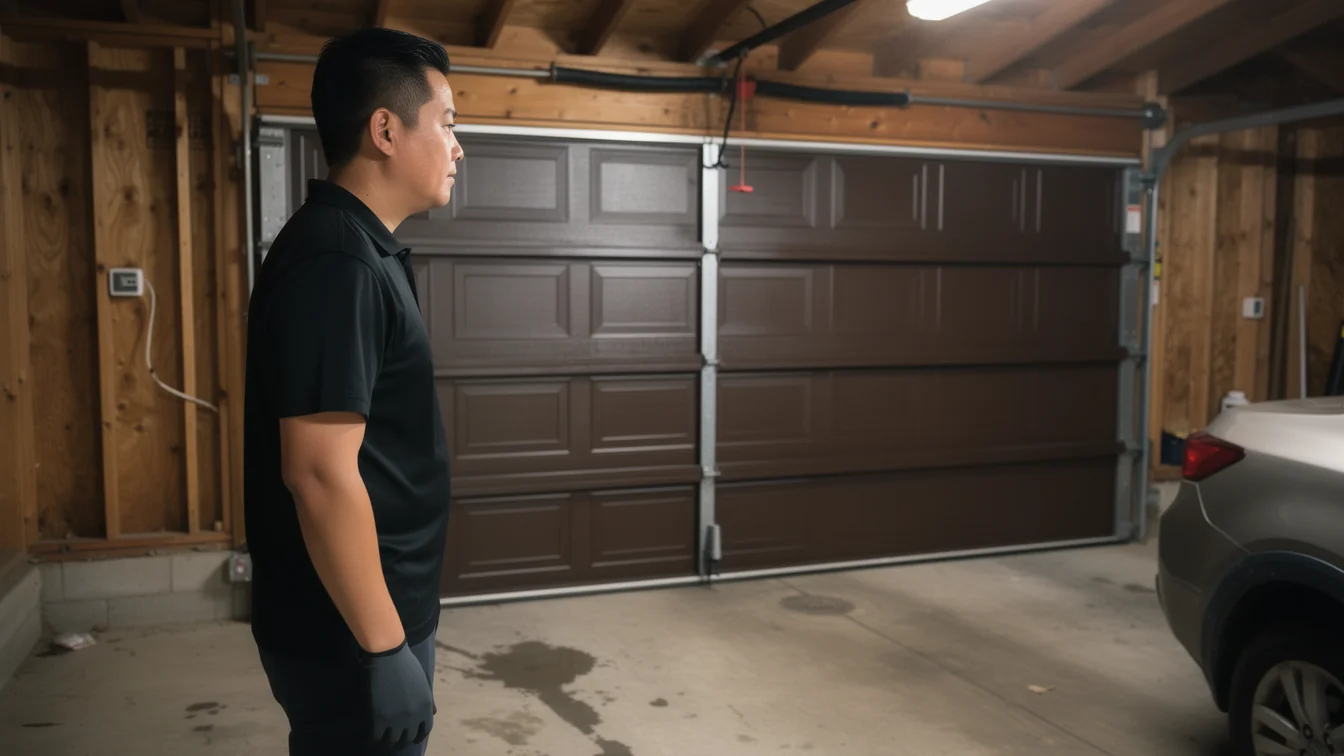
What That Noise Your Garage Door Is Making Actually Means
La Crosse homes built between 1967 and 1998 carry original track and spring hardware that reacts hard to our cold-severe winters.
Read guide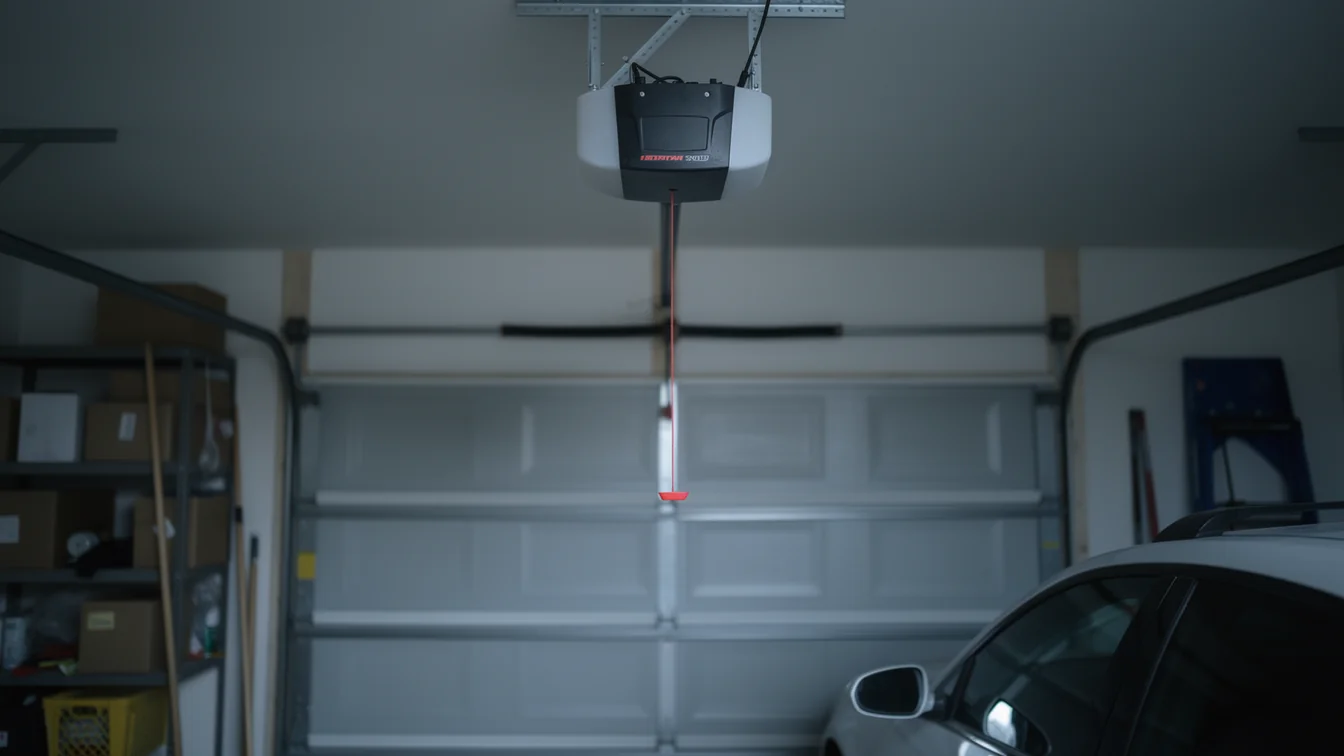
What Winter Does to Your Opener in La Crosse
Most La Crosse garages date to 1967-1998, wired for openers never built for severe cold power cuts that freeze tracks and drain backup batteries fast.
Read guide
Cold Weather and Broken Springs in La Crosse
Why La Crosse winters snap torsion springs on houses built 1967-1998, what it costs to fix, and why ignoring a broken spring here gets expensive fast.
Read guideReady when you are
Need a garage door sorted in La Crosse?
La Crosse Garage Door Pros repairs and installs garage doors, springs and openers in La Crosse, WI and the surrounding area.